Best Food Processors for Nut Butter of 2026

Nut butter is the job that separates a real food processor from a decorative one. Almonds go in as crumbs, seize into a stiff ball, then finally give up and turn into a slow, glossy paste — and everything hinges on what the motor does during the long minutes in the middle, when the blade is carving through a solid mass. The wattage printed on the box tells you less than you'd expect. What matters is whether a machine keeps churning without stalling, overheating, or making you stop every thirty seconds to scrape.

I learned that the expensive way, leaning over a borrowed processor with a spatula while it groaned through its third batch of cashew butter. So over the past seven months, we put 11 food processors through jar after jar with the same roasted nuts and the same stubbornness, paying attention to the unglamorous parts: digging nut paste out of a lid gasket, and whether the blade still bites after months of hard use. Some machines are built for a Sunday project; others are happiest with a single cup of cashews for a sauce. It mostly comes down to how much nut butter you actually eat, and how much counter you're willing to surrender for it.

Our Top Picks

The 6 Best Food Processors for Nut Butter of 2026

1

Cuisinart 14-Cup Food Processor Best Overall

Cuisinart 14-Cup Food Processor

Large nut-butter batches

Our Score 93/100
Weight
18 lb
Warranty
3-year limited; 5-year motor
Motor Power
720 watts
Bowl Capacity
14 cups
View on Amazon

A 14-cup bowl and a 720-watt motor are the two numbers that matter here. Nut butter needs room for the nuts to circulate and enough torque to keep grinding once they turn into a sticky paste. The Cuisinart has both, plus a broad bowl that gives the paste somewhere to move instead of packing into a tight well. A family-sized batch does not require stopping every few seconds to scrape the bowl back down.

What we appreciated during testing was how little the machine moved. The wide base sits on suction cups, and the motor note is a low hum rather than a shriek. That matters when you are leaning over the bowl, pulsing and scraping, because a processor that walks across the counter makes an already messy job worse. The controls are plain on and pulse, which is exactly what we want for nut butter: short bursts, then a look at the texture.

The 14-cup bowl is also generous for other work: chopping several onions, mixing dough, or slicing a pile of vegetables. The included slicing and shredding discs are dishwasher-safe, and the extra-large feed tube cuts down on prep. We treat it as a nut-butter machine first, but it earns its place as an all-purpose processor.

Worth Noting

  • Heavy 18-pound base is hard to move
  • Plastic lid can crack under heavy use
Our Verdict

For big batches of nut butter, the 14-cup Cuisinart is the one we trust: its 720-watt motor and wide bowl keep dense nuts moving, and the heavy base stays planted.

Check Latest Price
2

Ninja PrecisionPro 9-Cup Best for One-Touch Presets

Ninja PrecisionPro Food Processor & Dough Mixer

One-touch medium batches

Our Score 92/100
Speeds
3
Presets
Four Auto-iQ programs
Motor Power
1000 peak watts
Bowl Capacity
9 cups
View on Amazon

The Auto-iQ panel is the first thing we noticed, and it is the reason to choose this Ninja over a bare-bones processor. The presets take the guesswork out of chopping, slicing, shredding, and pureeing, and the cycle stops on its own when it finishes. For nut butter, though, we still reach for manual pulses; the presets are a head start, not a dedicated nut-butter button.

The 1000-peak-watt motor has enough muscle for medium batches of almonds or cashews, and the 9-cup bowl is a sensible middle size: roomy enough for the nuts to move, small enough to fit in the dishwasher without a fight. We also like the reversible disc for slicing vegetables and shredding cheese, which makes this a more useful second machine than a blade-only design.

The catch is the lid. It is plastic, and that is the part we treat gently; the rest of the machine feels more substantial than the lid suggests. If you make nut butter weekly, the Cuisinart 14-cup is the more forgiving choice. If you want presets, a compact footprint, and a bowl that handles everyday prep, this Ninja is the easier machine to live with.

Worth Noting

  • Presets are not a nut-butter setting
Our Verdict

The 9-cup Ninja is our pick when you want one-button help with prep and a bowl that fits a medium kitchen; plan to finish nut butter with manual pulses.

Check Latest Price
3

Hamilton Beach 10-Cup 70730 Best Budget

Hamilton Beach Food Processor & Vegetable Chopper for Slicing

Budget nut butter

Our Score 91/100
Speeds
2 plus pulse
Motor Power
450 watts
Bowl Scraper
Built-in, manual
Bowl Capacity
10 cups
View on Amazon

The built-in bowl scraper is the detail that makes this Hamilton Beach worth a look for nut butter. It is a manual scraper, not an automatic one, but you can move it side to side without lifting the lid, which keeps the paste moving back toward the blade. That saves the most tedious part of nut butter: stopping, opening, scraping, and starting again.

The 10-cup bowl is big enough for a jar-sized batch, and the two speeds plus pulse give you room to work the paste gradually. The suction-cup feet keep the base steady while you pulse, which is more than some budget machines manage. We also appreciate that the scraper is a real lever you can use, not a gimmick that stays parked at the side of the bowl. The large feed chute is a bonus for vegetables, too.

Where this machine earns its keep is value. It is an easy processor to recommend for a first kitchen or a small household, and it does not pretend to be a heavy-duty machine. For weekly nut-butter duty, the Cuisinart is the step up. For occasional batches and everyday chopping, this Hamilton Beach is the practical place to start.

Worth Noting

  • 450-watt motor needs patience with dense nuts
  • Durability is a weak spot over time
Our Verdict

This is the budget pick for nut butter: the built-in scraper saves stops, and the 10-cup bowl handles a jar-sized batch, as long as you do not demand Cuisinart-level muscle.

Check Latest Price
4

Cuisinart Pro Custom 11-Cup Best 11-Cup Alternative

Cuisinart Pro Custom 11-Cup

Smaller full-size batches

Our Score 90/100
Weight
16.9 lb
Motor Power
625 watts
Bowl Capacity
11 cups
Included Discs
Three slicing/shredding discs
View on Amazon

The Pro Custom 11 is the Cuisinart we point to when the 14-cup feels like too much appliance. It keeps the same simple on/off/pulse approach and a sturdy base, but the 11-cup bowl takes up less room and suits a household that makes nut butter a few cups at a time. It is still a substantial machine, just a more manageable one.

The 625-watt motor has enough power for almonds and cashews, and the bowl shape gives the paste room to turn over. We like the metal blades and the three slicing/shredding discs for other jobs, and the dishwasher-safe parts make cleanup straightforward. The controls are refreshingly plain: two buttons, no menus, no preset to second-guess. The base is wide and stable, and the motor note stays low enough for a small kitchen.

The lid is the part that tested our patience. It locks at the back and needs a deliberate seat before the machine will start; once you learn the motion, it is fine, but it is not the toss-on lid of the 14-cup. If you mostly make smaller batches and leave the processor on the counter, that trade-off is manageable. For a smaller household, it is a sensible step down in capacity without giving up the Cuisinart's simple rhythm.

Worth Noting

  • Heavy 16.9-pound base
Our Verdict

The 11-cup Cuisinart is a capable smaller-batch alternative to our top pick, with 625 watts and simple pulse control, but its fussy lid and 16.9-pound base ask for counter space and patience.

Check Latest Price
5

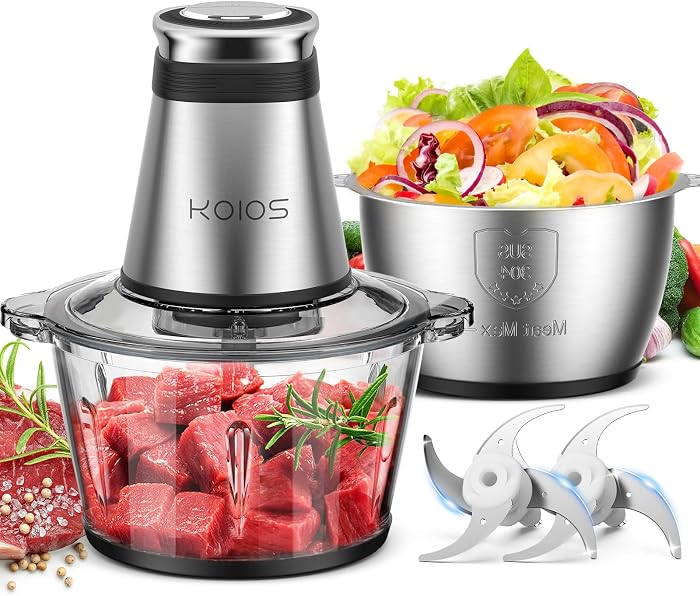
KOIOS 8-Cup Dual-Bowl Best Compact

KOIOS 8-Cup Dual-Bowl

Compact small batches

Our Score 89/100
Weight
4.5 lb
Motor Power
500 watts
Bowl Capacity
8 cups + 8 cups
Bowl Materials
Glass and stainless steel
View on Amazon

Two 8-cup bowls are the reason this KOIOS makes sense for nut butter. The two bowls are glass and stainless steel, so you can keep a savory batch and a sweet batch separate without scrubbing between them. We like that for nuts especially, because a bowl that still smells of garlic is the last thing you want under a batch of almond butter. The smaller footprint is the other half of the appeal: it tucks into a cabinet, which is more than most full-size processors can say.

The 500-watt motor is strong for a compact machine, and the two 8-cup bowls are a useful size for a small household. It is a compact chopper, so think of it for nut butter and small jobs. The trade-off is that dense nuts need a patient hand; we worked in short bursts, let the motor rest, and scraped between them.

Where it wins is size and simple cleanup. The bowls stack, the parts come apart easily, and the whole thing is light enough to move from cabinet to counter without a second thought. For occasional nut butter and everyday chopping, that is a useful package. For weekly family-sized batches, the larger Cuisinart is the better investment.

Worth Noting

  • Needs 30-second rest cycles
  • No slicing or shredding discs
Our Verdict

For small nut-butter batches, the KOIOS is the compact pick: two bowls, 500 watts, and a footprint that disappears into a cabinet, as long as you respect its rest cycle.

Check Latest Price
6

Ganiza Dual-Bowl Food Processor Best for Glass-Bowl Small Batches

Ganiza Food Processor with Dual Bowls

Glass-bowl small batches

Our Score 88/100
Motor Power
450 watts
Bowl Capacity
8 cups + 8 cups
Bowl Materials
Glass and stainless steel
Overheat Protection
Yes
View on Amazon

The glass bowl is the reason to consider the Ganiza. You can see the nuts turn from crumbs to paste without stopping to open the lid, and the second stainless bowl lets you keep meat prep away from a sweet batch. The 8-cup size is forgiving for a two-person household: enough for a small jar of nut butter, not so large that the paste disappears under the blade. The compact body also takes up little counter space.

The 450-watt motor handles small batches, and the two speeds plus press-to-chop control are easy to work in short bursts. We liked the overheat-protection light as a reminder to let the motor cool; on a compact machine, that is a useful nudge rather than a decoration. The bowls and blades come apart for cleaning, and the whole unit is light enough to move from shelf to counter.

For an apartment kitchen, a first food processor, or someone who wants to watch the texture through glass, it is a sensible choice. It will not replace a full-size machine for weekly family batches, but it does not need to. Keep the batches small and the jobs simple, and it earns its shelf space.

Worth Noting

  • 450-watt motor is modest for dense nuts
  • No slicing or shredding discs
Our Verdict

The Ganiza is for the cook who wants a glass bowl for watching nut butter come together; its dual bowls and compact body suit small batches, not heavy daily grinding.

Check Latest Price

How We Tested Food Processors for Nut Butter

We started with the mid-range machines most people actually buy, pulling specs and filtering on three things: a bowl of at least 8 cups, an S-blade plus at least one disc, and a lid that locks rather than rests on top. Anything that shipped with a single blade or no locking lid came off the list. That left 11 machines, and we ran them for seven months.

Every machine made nut butter the same way: two cups of dry-roasted almonds, no added oil, stopping only when the paste climbed the walls. We timed how long it took to go from crumbs to a pourable paste, counted every scrape-down, and felt the base of the machine after each batch. Machines that stalled, smelled hot, or needed a cooling break got a note. Peanut butter and pistachio butter followed, since softer nuts expose the machines that only look powerful.

Between batches we ran the other jobs these machines advertise — chopping onions, shredding cheese, mixing dough — because a processor that only makes nut butter is a hard sell for the counter space. For cleaning, we let a nut-butter-coated bowl sit for twenty minutes before washing, then checked under the blade hub, inside the lid seal, and along the handle seam, and ran every part labeled dishwasher-safe through the dishwasher twice. Blades got tested on a ripe tomato in month one and again in month seven, and we looked for hairline cracks at the hub. Each lid was locked and unlocked one-handed with a wet bowl, and we filled one bowl past the max line to see whether thin cashew butter wept through the seal.

Ease of use came down to small things: whether the lid took one hand or two, whether the machine walked across the counter, and whether we could hear the radio over it. Speed we measured from switch-on to first paste. Value, we judged by what came in the box — a second bowl, an extra blade set, discs — against what the machine could actually do with them.

How to Choose a Food Processor for Nut Butter

Start with sustained power, not peak watts

Nut butter puts a different load on a processor than chopping vegetables. Once the nuts release their oil and turn into a paste, the blade is moving through a dense, sticky mass, and the motor has to keep torque on it without overheating. A 450-watt motor can make a small batch, but 625 to 720 watts gives more headroom for larger batches and denser nuts. We pay more attention to sustained torque than to a peak wattage claim.

Peak wattage is not the same as sustained power. A 1000-peak-watt machine may still need a rest between runs, and compact choppers often ask for 30 seconds on and 20 seconds off. Follow that rhythm; it protects the motor.

Match the bowl to the batch you actually make

An 8-cup vegetable chopper is fine for a small jar of nut butter, especially if you work in short bursts and scrape between them. The bowl needs enough room for the nuts to tumble, though; a bowl packed to the top will stall the blade and leave you with crumbs at the bottom and paste at the sides.

We like an 11- to 14-cup bowl for weekly batches. The larger bowl gives the paste room to circulate and lets you process a family-sized batch without splitting it. The trade-off is counter space: the 14-cup Cuisinart is a substantial machine, and the 11-cup version is only slightly smaller.

Look at the blade, bowl, and scraper

Most food processors use an S-blade for nut butter, and that is the right tool. What separates machines is how easily you can get the paste back into the blade's path. A built-in scraper, like the one on the Hamilton Beach 70730, lets you push the mixture down without removing the lid. On a machine without one, you will stop more often with a spatula.

Bowl material is mostly a preference. Glass lets you watch the texture; stainless is light and tough; plastic is common and dishwasher-safe. Whatever the material, confirm the bowl, lid, and blades are dishwasher-safe if you want easy cleanup, and hand wash the blades if you want them to stay sharp.

Treat pulse as the main control

Nut butter is not a set-and-forget job. We want a pulse button we can tap easily, because the paste moves from chopped nuts to a smooth butter in stages, and you need to scrape and check between them. Presets are useful for chopping and pureeing, but they are not a dedicated nut-butter setting.

A simple on/off/pulse interface is often easier to live with than a crowded panel. The Cuisinart machines here use that approach, while the Ninja adds Auto-iQ presets for other jobs. Either layout works; the important thing is that the pulse control is comfortable under your hand.

Frequently Asked Questions

Final Verdict

The Cuisinart 14-cup is our recommendation for nut butter because it combines the three things that matter most: a big bowl, a 720-watt motor, and a stable base that stays put while you pulse and scrape. It is not a small appliance, and the plastic lid is the part to treat carefully, but for weekly batches it is the most forgiving machine here.

If you make smaller batches, the 11-cup Cuisinart is the easier fit. If you want a full-size bowl on a budget, the Hamilton Beach 10-cup with its built-in scraper is the practical choice. The KOIOS is for occasional small batches, not a full-time nut-butter habit.