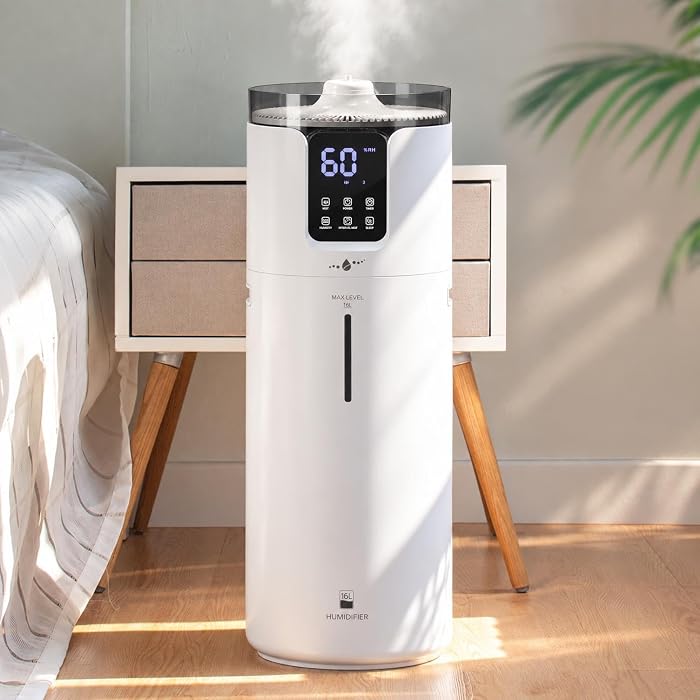
Best Whole House Humidifiers of 2026

By the third week of January, the air in my house turns on me: static snaps off every doorknob, the hardwood gaps open, and everyone wakes up scratchy. A whole-house humidifier fixes that by adding moisture to the air your furnace is already moving, or to a whole floor from one large console. The little countertop unit you filled in October isn't going to cut it.

We've spent a full heating season with eight of them — steam and bypass models tied into ductwork, plus consoles and pedestals that stand on their own — and the differences that matter aren't printed on the box. They're how loud the fan is at 2 a.m., how many trips you make with a bucket, and whether the humidity readout agrees with the hygrometer on my shelf.

One thing to know before you shop: coverage ratings tend to be optimistic in a house full of hallways and closed doors, so look at daily output first. The picks below are the ones that held up.

Our Top Picks

The 6 Best Whole House Humidifiers of 2026

1

AprilAire 600M Whole-House Humidifier Best Overall
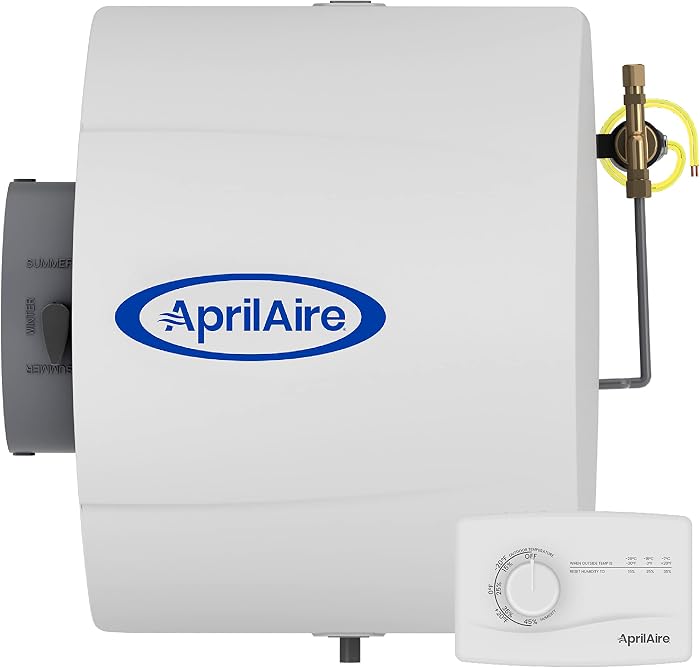
AprilAire 600M Whole-House Humidifier

Ducted homes that want every room humidified

Our Score 92/100
Type
Furnace-mounted evaporative
Output
17 gal/day
Control
Manual humidistat
Coverage
4,000 sq ft
View on Amazon

A furnace humidifier does not sit in a room; it mounts on the ductwork and adds moisture to the air your blower is already moving, which is how it reaches every room the ducts serve rather than one corner of the house. The AprilAire 600M is the one we point people to first. It is rated at 17 gallons a day for homes up to 4,000 square feet, and it does the work with a wet evaporative panel that warm air passes over on its way upstairs: nothing to empty, nothing to trip over, no white dust settling on the television.

What we appreciate most is how little there is to think about once the box is hanging on the plenum. The control is a manual humidistat, so you turn a dial to a number and the unit runs until the sensor reads that level. That is a step down from the automatic controls that read outdoor temperature, and it means a walk to the furnace when a cold snap lands, because the setting that is right at 30 degrees will fog your windows at zero. Twice a winter is the realistic amount of attention this asks for, and a fresh water panel once a heating season is the only routine expense.

The unit itself is 8.7 pounds of plastic, about the size of a shoebox, and it disappears onto the duct beside the furnace. AprilAire covers it for five years, one of the longest warranties in this group. If your house has forced-air heat and a drain within reach of the furnace, this is the sensible starting point.

Worth Noting

  • Install needs a water line, drain, and duct cutout
Our Verdict

We recommend the 600M to anyone with forced-air heat: it is the most affordable way here to humidify every room at once, and it asks almost nothing after install.

Check Latest Price
2

AIRCARE MA1201 Console Humidifier Best Plug-In Console

AIRCARE MA Whole-House Console-Style Evaporative Humidifier (Console)

Renters and homes without usable ductwork

Our Score 89/100
Tank
3.6 gal
Type
Console, plug-in
Runtime
36 hours
Coverage
3,600 sq ft
View on Amazon

No plumber, no ductwork, no wiring. The AIRCARE MA1201 is a console you fill, plug in, and roll to the middle of the room on four casters. It is rated for 3,600 square feet, holds 3.6 gallons, and moves air across a wick instead of making mist, so the moisture leaves invisibly and the minerals stay in the filter rather than settling on your furniture as white dust. The tank pulls out from the side, which beats lifting a reservoir off the top of the unit.

For a rental, a finished basement, or a house where nobody is cutting into ductwork, this is the plug-in we reach for. The digital humidistat holds a set point and shuts the unit down when the tank runs dry, and a first wick comes in the box. Sitting it near the center of the space and leaving interior doors open does more for coverage than the square-footage rating suggests.

Filling is the ongoing chore. In a big open room running hard, 3.6 gallons will not last a full day, so plan on a pitcher beside the unit and a top-off before bed. Wipe out the tank every couple of weeks and the plastic will hold up better than its thin walls imply. It is not furniture and does not pretend to be, but in white it disappears against a wall.

Worth Noting

  • Loud at the higher fan speeds
  • Wicks need replacing at least once a season
Our Verdict

We send renters and anyone without ductwork to the MA1201 first: it humidifies a whole floor from a wall outlet, as long as you can live with the fan on high.

Check Latest Price
3

Levoit Superior 6000S Humidifier Best Mist-Free Floor Model

Levoit Evaporative Humidifiers for Home Whole House

Open-plan floors and households avoiding filters

Our Score 88/100
Tank
6 gal (23 L)
Type
Evaporative, mist-free
Runtime
72 hours
Coverage
3,000 sq ft
View on Amazon

Six gallons is the number that matters. The Levoit Superior 6000S holds 23 liters — enough for 72 hours on low by the manufacturer's rating — and turns it into vapor by blowing air through a wet evaporative wheel rather than a mist maker. That is why it takes tap water without leaving a white film on the furniture or a damp patch on the floor. Anyone who has scraped mineral scale out of a bedroom humidifier will recognize the appeal.

It is the boring parts that sold us. The pump detaches so you can get a hand into the reservoir for a real cleaning instead of swishing vinegar through a narrow neck, and the humidity sensor is rated to within 5%, which is tight enough to keep auto mode from swinging past your set point. It suits an open-plan main floor, a big rec room, or a house where running a water line to the furnace is not happening.

The one thing we cannot vouch for yet is time. This is the newest design in the group, and a humidifier gets judged over several winters, not one. Everything else we can see, we like: six gallons, tap water, no dust, and a cleaning job that takes ten minutes instead of an hour.

Worth Noting

  • Covers 3,000 sq ft, so one zone rather than a house
Our Verdict

For a big open floor and a household tired of buying filters and distilled water, the 6000S is our pick: tap water in, no dust out, three days between refills.

Check Latest Price
4

AprilAire 800 Steam Humidifier Best for Very Large Homes

AprilAire 800 Whole-House Steam Humidifier

Homes too large for a bypass humidifier

Our Score 87/100
Type
Steam canister
Output
11.5–34.6 gal/day
Voltage
120V
Coverage
10,300 sq ft
View on Amazon

At some point a bypass humidifier stops being enough: the house is too big, the furnace short-cycles, or the duct run never gets moisture to the far bedrooms. That is the case the AprilAire 800 is built for. It boils water in an electrode steam canister and injects the steam into the duct, with output that scales from about 11.5 to 34.6 gallons a day depending on how the unit is wired, and a coverage rating of 10,300 square feet — more than double anything else here.

It is also the least supervised unit we tested. The automatic control reads indoor humidity and outdoor temperature together, so it lowers the target on a bitter night before your windows fog, and the digital panel tells you when the canister is spent. We are partial to the way it ignores water quality: electrode canisters need the minerals a filter would strip out, so tap water and a drain are all it asks for. And because it makes its own steam, it does not need a hot furnace plenum to work with.

The hurdles are real. Full output requires 240-volt wiring, and on 120 volts you get the bottom of that range — still more moisture than most houses need. This is the premium purchase here by a wide margin, so it makes sense in a house that has already outgrown a lesser unit, not as a first attempt at humidity.

Worth Noting

  • Steam canisters are a recurring replacement cost
Our Verdict

For homes past 5,000 square feet, or any ducted house where a bypass unit never kept up, the 800 is the one that delivers, at a price to match.

Check Latest Price
5

AIRCARE EP9 800 Pedestal Humidifier Best Pedestal Style

AIRCARE Digital Whole-House Pedestal-Style Evaporative Humidifier (Espresso)

Living rooms where the unit stays visible

Our Score 86/100
Tank
3.5 gal
Weight
27 lb
Coverage
2,400 sq ft
Fan Speeds
9
View on Amazon

At 27 inches tall in a dark espresso finish, with a digital panel across the front, the AIRCARE EP9 800 reads as a small cabinet rather than a medical appliance. Nothing about it says humidifier from across the room. Under the finish it is a wick evaporative unit rated for 2,400 square feet, with a 3.5-gallon reservoir and nine fan speeds instead of the usual three.

There is no removable tank. You pour water into the top, which is why a funnel comes in the box, and the fill line is hard to see in low light — a pitcher and a steady hand get it done in a couple of minutes. That is the trade for the looks, and it is the main thing to know before you park the unit where you have to fill it every day.

In a living room or a finished basement, this is the one we point to. The extra fan steps mean you can fine-tune output instead of choosing between too little and too much, the remote saves crouching to check the number, and 2,400 square feet covers the main floor of most houses. Nine speeds sounds like a marketing figure until you are trying to hold a level in a room that runs slightly warm.

Worth Noting

  • Fan noise climbs at the higher speeds
Our Verdict

We recommend the EP9 800 when the humidifier has to live where people do: it looks like furniture and covers a whole floor from a corner of the room.

Check Latest Price
6

Lacidoll 16L Cool Mist Humidifier Best for Apartments and Single Open Floors

Lacidoll Cool Mist Humidifier Large Room

Apartments and single open floors

Our Score 85/100
Tank
16 L (4.2 gal)
Type
Ultrasonic cool mist
Runtime
48 hours
Coverage
1,500 sq ft
View on Amazon

This is a whole-room humidifier, not a whole-house one, and for the right buyer that is the point. A 4.2-gallon tank, a top-fill opening, and a 48-hour runtime on a single fill mean a condo, an apartment, or one open floor can hold a comfortable humidity without a daily refill or a plumber. For the money, it is the least expensive way in this group to treat a genuinely large room.

The details are better than the price suggests, and we noticed the small ones: a remote, a timer, an aimable nozzle, and a sleep mode rated at 35 dB that is quiet enough for a nursery. Ultrasonic mist is cool and immediate, so the effect shows up quickly in a closed room rather than by morning.

What it cannot do is a 3,000-square-foot house. The rating stops at 1,500 square feet, so a larger home needs two of these or a ducted unit. Care is the usual ultrasonic routine — rinse the tank weekly, dry it between fills, do not let water sit in it all summer — and the wide top opening makes that a two-minute job.

Worth Noting

  • One-year warranty is the shortest here
Our Verdict

We like it for apartments and single open floors: a big tank, a remote, and quiet nights for the least money here, provided one room's worth of coverage is enough.

Check Latest Price

How We Tested Whole-House Humidifiers for a Full Heating Season

We built the shortlist by pulling every whole-house humidifier we could find from the major brands — furnace-mounted bypass and steam units, plus console and pedestal evaporative models — then narrowing it to eight based on installation type, stated daily output, price, and whether replacement pads and filters were actually in stock. Testing ran through one full heating season, about six months, in homes ranging from a 900-square-foot apartment to a 3,000-square-foot house with an open floor plan.

Every unit ran against a target. We placed calibrated hygrometers in three rooms and logged how long it took to pull a room from roughly 30 percent to 45 percent, whether the onboard readout matched the hygrometer, and whether output actually stepped down once the set point was reached — that auto humidity control is the difference between comfortable and fogged windows.

The rest was lived-in detail. We counted refills and tracked water usage over a week, then judged refillability by whether it meant hauling a five-gallon bucket or hooking up a hose. Noise got measured with a decibel meter two feet away and by whether anyone woke up when it kicked on overnight. We watched pads and canisters for scale and mineral buildup, listened for rattles and solenoids that stuck, and asked where each one would realistically live in a hallway or utility room, since appearance counts for something the size of a small refrigerator.

In the coldest stretch we got, we compared each unit's square-footage claim against the rooms that actually stayed comfortable, which is where value for money sorts itself out.

How to Choose a Whole House Humidifier

Start With the Ductwork, Not the Humidifier

A furnace humidifier mounts on the supply or return plenum and adds moisture to air the blower is already moving, so every ducted room gets some. It needs forced-air heat, a water supply, and an opening cut into sheet metal. A console, pedestal, or floor unit needs only a level spot and an outlet, but it humidifies the space it stands in.

Choose furnace-mounted if you own the house, have ducts, and want the moisture spread evenly with no floor space surrendered. Choose a plug-in if you rent, have radiators or baseboard heat, or will not cut into ductwork. The trap: a console rated for 3,600 square feet is assuming an open plan with the unit near the middle. Close the bedroom doors and that coverage stops at the doorway.

Match Output to Square Footage, Then Add a Margin

Every coverage rating here assumes a tightly built house. A 1950s house with original windows needs more output than the number on the box suggests, so size up rather than matching exactly. Furnace units in this group are rated between 11.5 and 34.6 gallons a day, while the plug-in models hold 3.5 to 6 gallons of water.

Tank size is about refill cadence, not coverage. A 3.5-gallon console pushing hard in a big room may need filling daily; a 6-gallon floor unit can stretch to three days on low. Be honest about which one you will actually keep up with in February.

Manual Control, Automatic Control, and Window Condensation

A manual humidistat is a dial: it holds whatever level you set, regardless of the weather outside. An automatic control also reads outdoor temperature and lowers the indoor target as it gets colder, which is what keeps windows from sweating on a bitter night. Automatic versions cost meaningfully more, and the honest question is whether you will walk to the furnace and turn a dial when a cold snap lands.

Check where the humidistat sits either way. A sensor mounted on the return duct in a basement is reading basement air, so expect the upstairs number to run a few points off what you set.

Noise Is the Spec Nobody Prints

Furnace-mounted units are effectively silent indoors because they borrow the furnace blower. Consoles and pedestals run their own fans, and the gap between low and high is the gap between background hum and something you hear from the next room. Low-speed output is the figure that matters, because that is the setting you will live with overnight.

If the unit goes in a bedroom or an open living space, favor models with more fan speeds — nine steps let you hold a level quietly, where three steps force a jump from too little to too loud. In a basement or a hallway, this matters far less.

Frequently Asked Questions

Final Verdict

The AprilAire 600M is what we recommend to most people with forced-air heat: 17 gallons a day delivered through the ductwork, a five-year warranty, and a dial you touch twice a winter. It is the least expensive furnace-mounted pick here and asks for almost nothing once it is installed.

If cutting into ductwork is not happening, the AIRCARE MA1201 humidifies a whole floor from a wall outlet for less money than anything else in this group. And if your house runs past 5,000 square feet, or a bypass unit never kept up, the AprilAire 800 and its steam output are the only things here that close the gap.