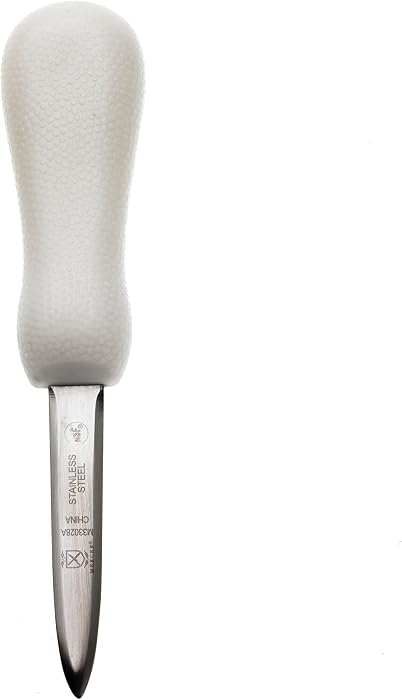
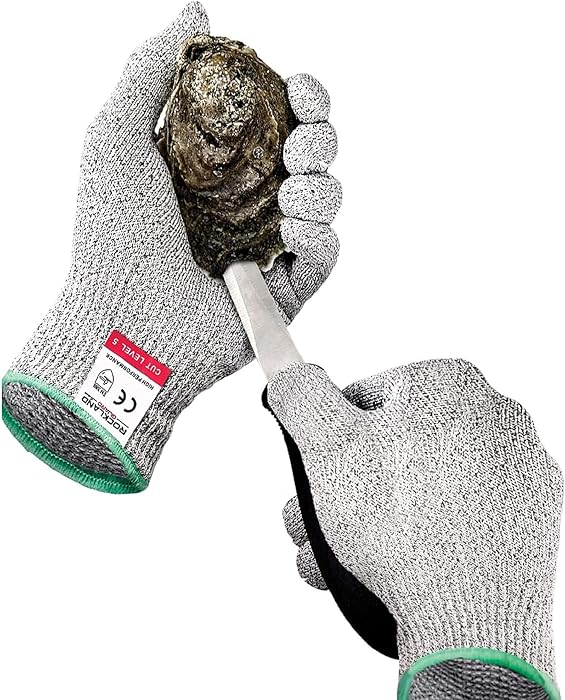
Dexter-Russell Sani-Safe Oyster Knife Best Overall

- Care
- Hand wash
- Handle
- Textured Sani-Safe
- Blade Style
- New Haven, curved tip
- Blade Length
- 2.75 inches
The bent tip found the hinge on the first oyster we opened with it, and that's not a small thing. The New Haven tip is angled just enough to drop into the seam at the back of the shell, so opening starts with a light push rather than a shove. The 2.75-inch blade is short enough that the work happens at your wrist, and the shell lifts instead of shattering.
What puts this one ahead of the other New Haven knives in this guide is what happens after the fiftieth shell. The carbon steel stays stiff — no flex, no set, no wobble where the blade meets the handle — and the textured Sani-Safe grip is the surest thing here once your hands are wet. We also like that the handle is ambidextrous and slightly squared, so it doesn't rotate as you turn the knife.
It's hand wash only, which matters with carbon steel: dry it before it goes back in the drawer or you'll find spots along the edge. The other trade-off is width. The blade is thick enough to be strong, and on the smallest, tightest oysters in a batch it has to be worked in where the Victorinox slips straight through.
Eight inches overall puts the balance point back in your palm rather than out at the tip, and that's where the control comes from. Worth noticing if every shucker you've owned has been short and handle-heavy.
What We Like
- Stiff bent tip seats in the hinge on a light push
- Textured Sani-Safe handle holds a wet grip
- Blade stays rigid through long sessions
Worth Noting
- Blade is thick for the smallest oysters
- Carbon steel must be hand washed and dried
We recommend it as the default oyster knife: a stiff bent tip that finds the hinge, a handle that stays put when wet, and no drama after a hundred shells.
Check Latest Price